Work built for the part after launch.

Three representative systems: production clinical AI, fielded airway hardware, and a training product I built for the mats.

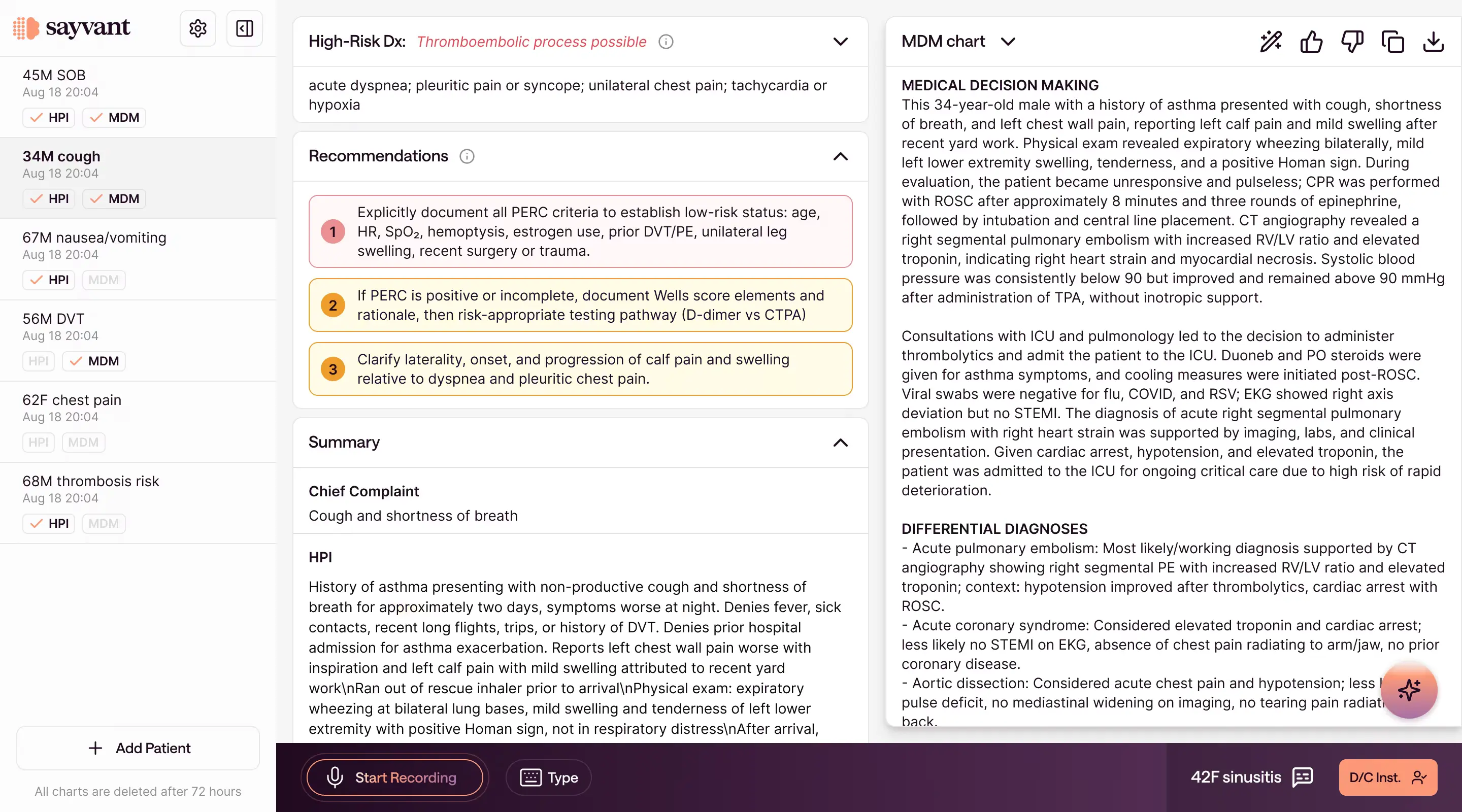
Sayvant clinical documentation interface showing chart reasoning and quality recommendations

Clinical AI / acute care documentation

Sayvant

Co-Founder & Head of Clinical AI

Production documentation AI designed around source fidelity, physician review, and the failures that appear after launch.

Problem
A fluent note can still invent a medication, flatten uncertainty, or leave a physician with unsafe cleanup work.
Built
Physician-written rubrics, chart-grounded QA, dangerous-fabrication review, PHI-aware routing, and closed-loop complaint repair.
Result
Used across 100+ care sites and more than 1.1M charts; 1,089 closed-loop QA iterations across the published production study.
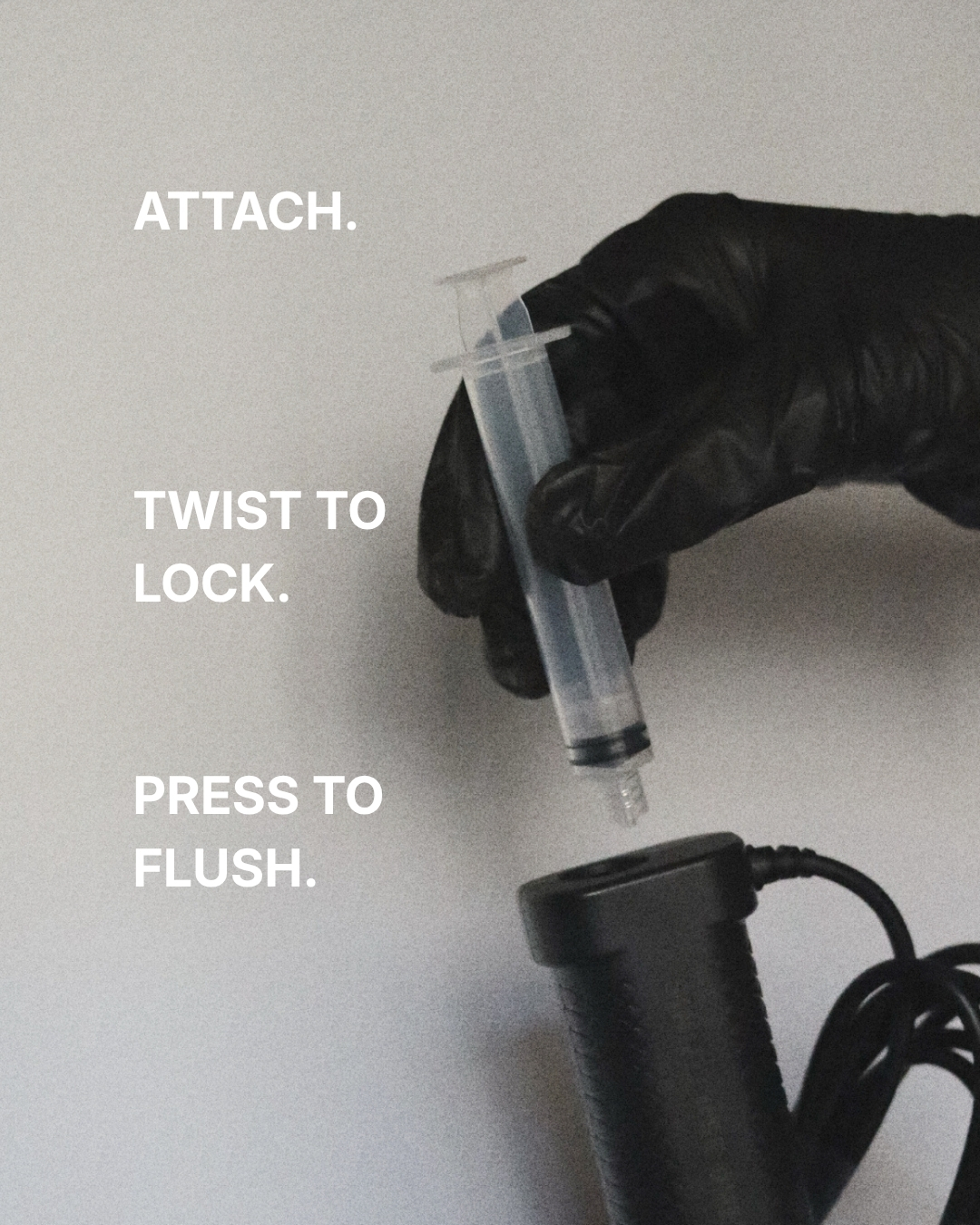
IntuBlade lens-clearing attachment being connected to the video laryngoscope

Airway hardware / procedural telemetry

IntuBlade

Founder & Product Lead

Single-use video laryngoscopy built around access, lens clearing, and the operational realities of field medicine.

Problem
Video airway tools often assume clean views, reusable monitors, maintenance infrastructure, and budgets that many EMS systems do not have.
Built
A single-use USB-C laryngoscope with fluid-assisted lens clearing, familiar Macintosh geometry, and connected video workflows.
Result
Used by 400+ EMS agencies across 41 states, with public video-linked telemetry and a 30-run manikin evidence-package audit.
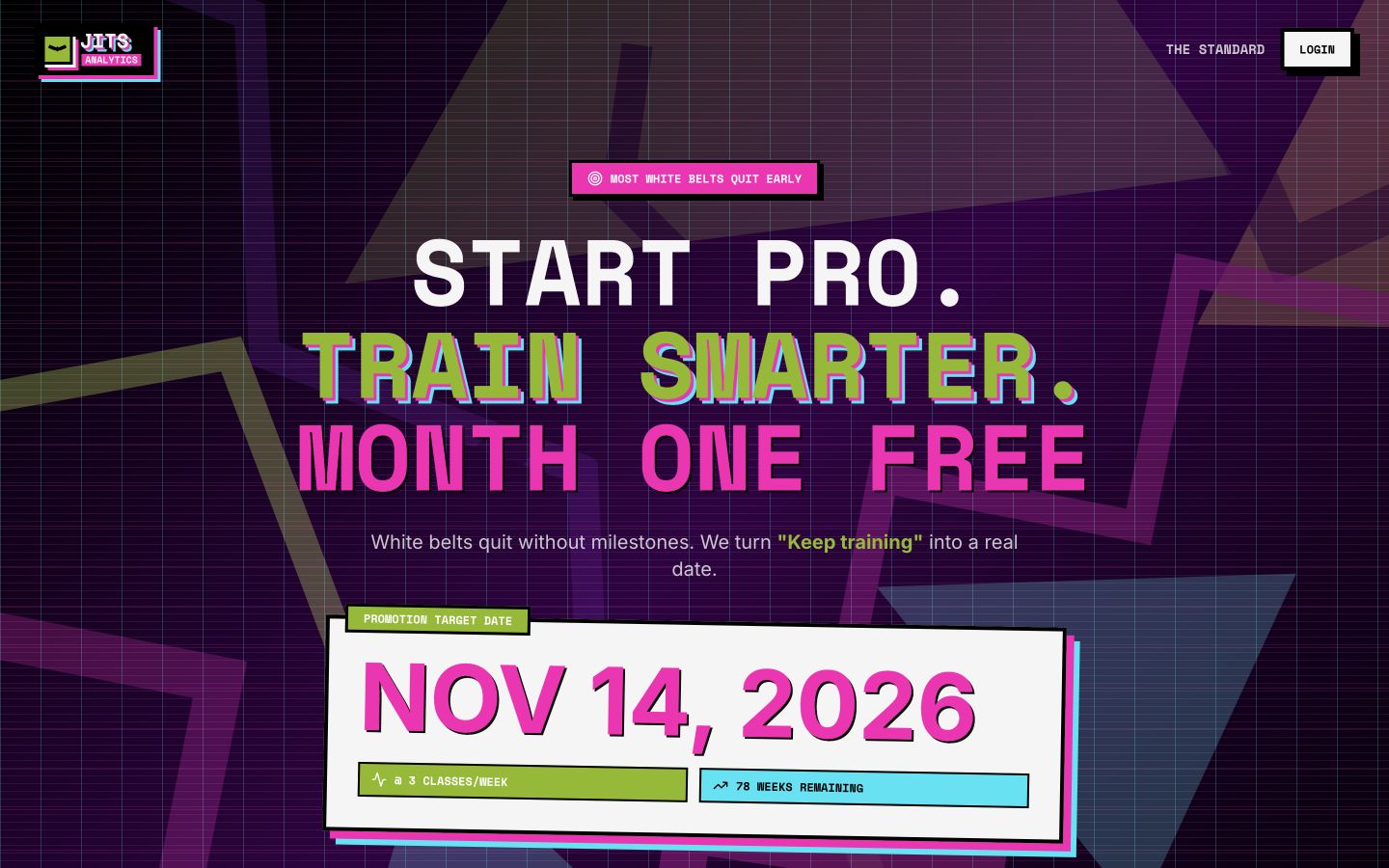
Jits Analytics homepage showing a promotion target and training milestones

Training software / BJJ analytics

Jits Analytics

Founder & Product Builder

A published training journal built to make progress on the mats visible between sessions.

Problem
Training notes, failed techniques, and coaching cues disappear quickly; generic habit trackers do not understand the structure of jiu jitsu.
Built
Session analysis, skill progression, weekly drills, Fighter DNA, coach chat, video review, gym connection, and iOS support.
Result
A live web and iOS product with real athletes, gyms, video analysis, and a full feedback loop outside healthcare.

Research and supporting work

The deeper methods, public evidence, and technical artifacts behind the case studies.

Open the research record
100+ care sites
1.1M+ charts
1,089 QA iterations
30 airway runs audited
Clinical AI methods 5 operating areas

Translational study design

I start with the clinical action, not the model. For chest pain, that means ACS risk, history quality, disposition, calibration, expected utility, and whether the bedside workflow can carry the output.

Clinical annotation and QA

Physician complaint review, note-defect triage, chart-grounding checks, and repair loops for documentation systems that clinicians actually sign.

Model evaluation

Benchmarks have to catch the thing that hurts patients and physicians: invented findings, missing context, brittle raters, silent drift, and notes that look better than they are.

High-acuity workflow

I have led ED operations and still practice emergency medicine. That matters for bedside AI. Someone has to know when another alert, score, or note field becomes clinician cleanup labor.

Procedural AI and devices

Video laryngoscopy work now extends into human-in-the-loop procedural guidance: connected video, computer vision observations, event telemetry, public package checks, and trainer-confirmed safety fields.

Selected research proof 5 records

Computer-Vision Procedural Telemetry for Airway Guidance: A Public 30-Run Manikin Evidence-Package Audit

medRxiv preprint. First-author preprint with Serge Klement and Ben Fedeles. The work audits a public post-reconciliation evidence package from 30 simulated airway runs using an IntuBlade device and iPhone workflow. The claim is intentionally bounded: video-linked structured JSON, QC status, app/model metadata, package hashes, and assigned-condition consistency for formative airway telemetry, not autonomous guidance, model accuracy, training effectiveness, clinical efficacy, or patient outcomes. DOI: 10.64898/2026.06.26.26356677.

Closed-Loop Quality Assurance for Production Clinical AI Documentation

medRxiv preprint. First-author preprint with Justin Wiley and Mark Heslin. The work turns physician complaints from production AI documentation across 13 hospital sites into reproducible QA artifacts, driving 1,089 optimization iterations with zero regressions on resolved complaints. Evidence base: 42 tracked complaints, 282 binary checks, 166 deterministic repair rules, and 6/6 fabrication-class failures eliminated in ablation. DOI: 10.64898/2026.05.27.26353977v1.

Training Clinical Decision Support from Ambient Conversation

Stanford AIMI / AMIA 2026 / manuscript in preparation. Stanford MCiM capstone work with a public control repo, AIMI poster, and AMIA 2026 podium abstract #15227. The project pairs ambient patient signal with physician-authored decision traces so decision-support models are not trained only on downstream chart text. Manuscript and validation plan in preparation with Ashley Griffin and Mark Musen.

Health-System Implementation of AI in Acute Care Delivery

HITLAB Spring Summit, Sayvant session. Sayvant session on acute-care AI rollouts, workflow ownership, clinician review, rollout friction, feedback loops, and product lessons from health-system deployment. Final title: Planning for the Future: Lessons Learned Partnering with Health Systems to Implement AI in Acute Care Delivery.

ScribeBench and Sayvant SQS Framework

Public benchmark and framework artifacts. Public clinical documentation benchmark and scoring framework for narrative quality, source fidelity, leak detection, dangerous fabrication, and rubric-based review of ambient scribe output.
Public software and artifacts 11 projects
Public evidence links 9 sources